
The King’s Speech: Ancient Ritual, Modern Politics – NATIONAL NEWS
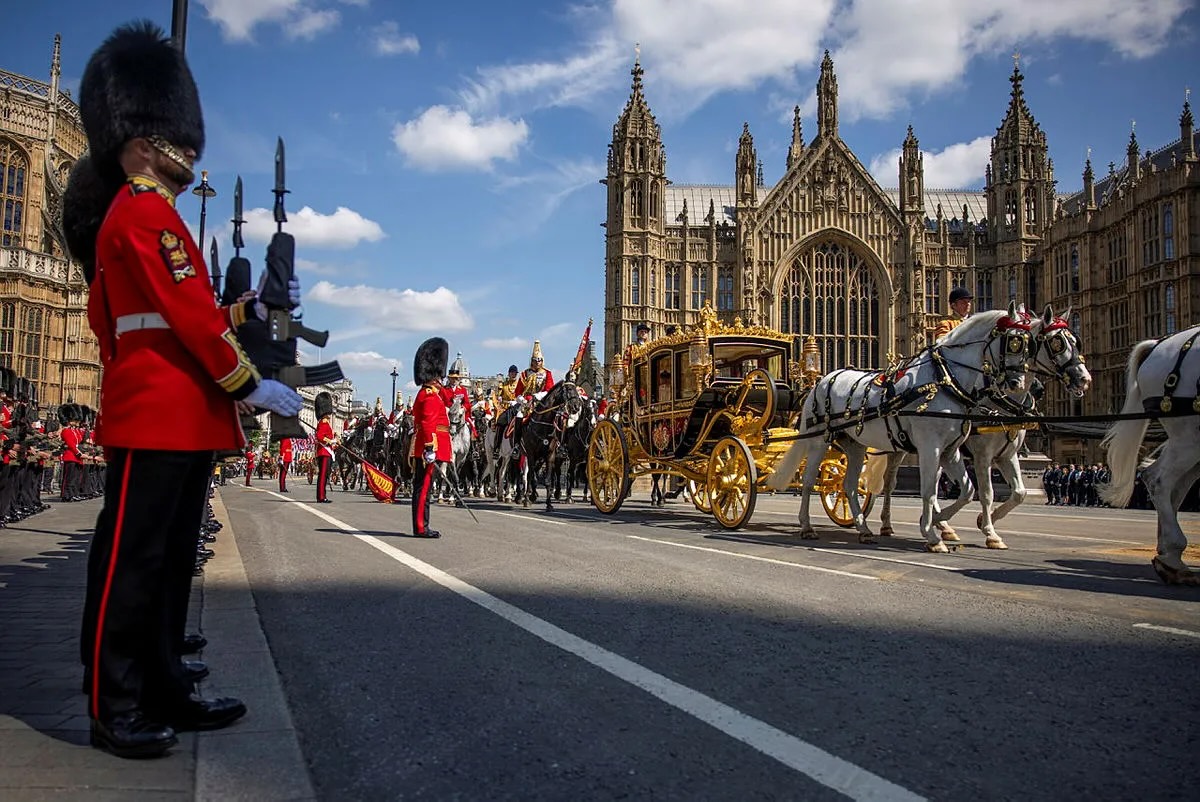
Amid scarlet robes, military processions and the unmistakable knock of Black Rod on the doors of the House of Commons, today Britain’s Parliament formally begins a new session.
The occasion, the State Opening of Parliament, is one of the oldest and most theatrical ceremonies in British public life, blending constitutional reality with centuries of symbolism.
At the centre of it all is the King’s Speech. Despite the title, it is not written by the King. The speech is drafted by the government of the day and sets out the laws and priorities ministers intend to pursue in the coming parliamentary session. The monarch’s role is constitutional and ceremonial, to deliver the programme from the throne in the House of Lords on behalf of the elected government.
This year’s ceremony comes at a politically charged moment. Prime Minister Sir Keir Starmer is expected to unveil an extensive legislative agenda while facing mounting political pressure after difficult local election results and unrest within Labour ranks. Reports suggest the government plans more than 35 bills covering economic reform, immigration, public services and energy policy.
Yet the constitutional choreography is designed precisely to rise above day-to-day politics. The State Opening is the only regular occasion when the three parts of Parliament, the Sovereign, the House of Commons and the House of Lords, gather together in one place. It is intended to symbolise continuity, stability and the authority of the state itself.
The ceremony begins long before the speech is read. In a tradition dating back to the failed Gunpowder Plot of 1605, the cellars beneath the Palace of Westminster are searched by the Yeomen of the Guard. The monarch then travels from Buckingham Palace to Westminster in state procession, escorted by the Household Cavalry.
Inside the Lords chamber, one of the most famous moments follows. Black Rod, the monarch’s representative in the Lords, is sent to summon MPs from the Commons. The Commons door is deliberately slammed shut in Black Rod’s face, a symbolic reminder that the lower house is independent from the Crown. Black Rod then strikes the door three times with an ebony staff before MPs follow to hear the speech. The ritual dates back to the constitutional struggles between Crown and Parliament in the 17th century.
For all the gold braid and ceremony, the King’s Speech also has real political importance. It functions as the government’s statement of intent for the year ahead, outlining proposed legislation and priorities. Parliament then spends several days debating its contents, effectively testing whether the government can command support in the House of Commons.
The modern ceremony largely dates from the rebuilding of the Palace of Westminster after the devastating fire of 1834, although versions of the ritual stretch back more than 500 years. Over time it has adapted to changing political realities. Ceremonial elements were reduced during the Second World War, while recent years have seen scaled-back versions during the pandemic and periods of royal ill health.
What endures is the remarkable contrast at the heart of the occasion, an unelected monarch reading the programme of an elected government to a Parliament that ultimately holds power over both. In few other democracies is the relationship between history and politics staged with such elaborate precision.
For supporters, the State Opening represents continuity in an age of political turbulence, a reminder that governments may come and go, but constitutional institutions endure. Critics, meanwhile, see it as an extravagant relic of inherited privilege.
Either way, the King’s Speech remains one of the defining set-pieces of British public life, part theatre, part politics, and entirely bound up with the long story of how Britain governs itself.
Did You Know?
- The King’s Speech is written by the government, not the monarch. The Sovereign reads the text exactly as drafted by ministers.
Before the ceremony, the cellars beneath Parliament are still searched by the Yeomen of the Guard, a tradition dating back to the Gunpowder Plot of 1605.
- Black Rod has the door of the House of Commons slammed in their face before knocking three times with an ebony staff, symbolising the Commons’ independence from the Crown.
- MPs are formally summoned to hear the speech in the House of Lords, but they stand crowded at the back of the chamber because only peers are allowed seats.
- The Imperial State Crown, worn by the monarch during the ceremony, contains nearly 3,000 diamonds as well as rubies, sapphires and emeralds.
- During the State Opening, a government minister is traditionally held at Buckingham Palace as a symbolic “hostage”, a custom dating back to times when relations between Crown and Parliament were far less stable.
- The ceremony combines traditions from more than 500 years of British constitutional history.
- The King’s Speech does not announce every government policy, only the legislation ministers intend to bring before Parliament in the coming session.
- Following the speech, MPs debate the government’s plans for several days, making it one of the most important parliamentary debates of the year.
- The State Opening is one of the few occasions when the Sovereign enters the House of Lords chamber in full ceremonial dress and regalia.
Comments (0)