
Starmer’s China Trip Draws Criticism – NATIONAL NEWS
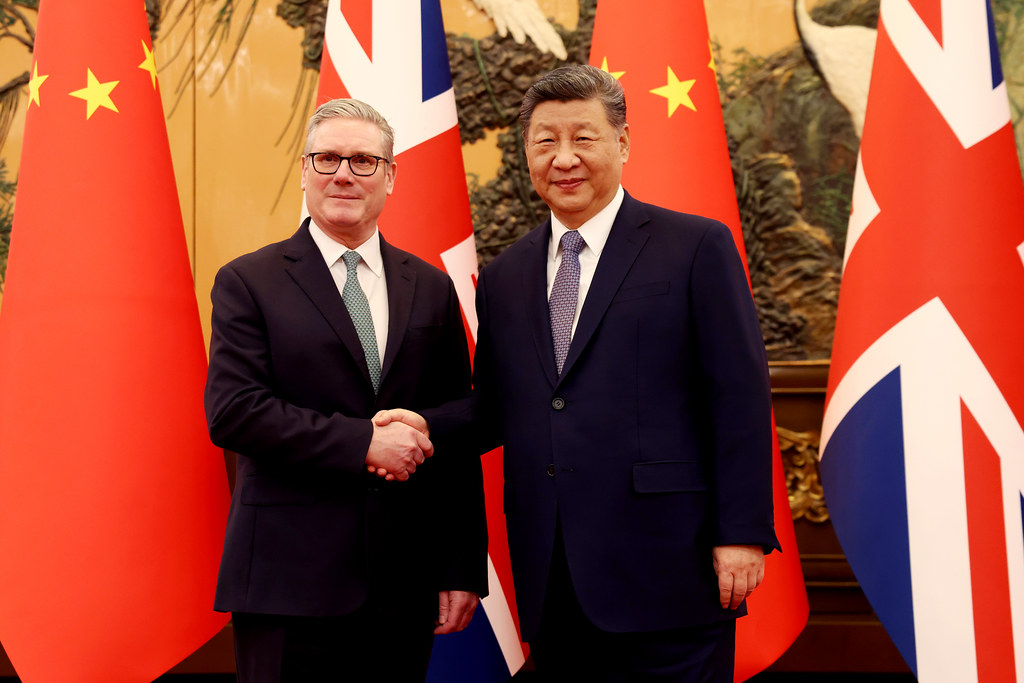
Prime Minister Sir Keir Starmer remains in China today as political debate grows over what Britain is gaining from the first visit by a UK leader since 2018.
The trip has been billed by Downing Street as an attempt to stabilise relations with Beijing, expand trade and attract investment at a time of economic pressure at home.
Sir Keir has met Chinese President Xi Jinping in Beijing and travelled on to Shanghai with a delegation of ministers and business leaders.
Government officials say outcomes so far include a new visa-free travel arrangement allowing UK passport holders to stay in China for up to 30 days, and a commitment by Beijing to halve tariffs on Scotch whisky exports.
However, critics argue the visit has delivered few concrete gains for British industry and has raised uncomfortable questions about how far the UK is willing to soften its stance towards Beijing.
Opposition Attack
Conservative leader Kemi Badenoch has been among those to condemn the visit, saying:
“Keir Starmer seems incapable of acting in Britain’s national interest. We should not roll out the red carpet for a state that conducts daily espionage in our country, flouts international trading rules and aids Putin in his senseless war on Ukraine.
“We need a dialogue with China, we do not need to kowtow to them. But Keir Starmer is weak and has no backbone.”
Shadow home secretary Chris Philp accused the government of trading “national security for economic crumbs,” reflecting broader Conservative unease over the reset in relations.
Concerns have also been raised by MPs and security analysts over China’s activities in the UK, including alleged cyber-operations and influence campaigns, and over proposals for a large new Chinese embassy complex in London, which ministers say will still face national-security scrutiny through the planning process.
The visit has also included agreement in principle to expand intelligence-sharing and law-enforcement cooperation between the UK and China on organised crime and illegal migration, including efforts to disrupt supply chains for boat engines used in Channel crossings. Government sources said the aim was to make it harder for criminal gangs to obtain equipment used in smuggling operations.
However, several MPs and migration analysts have privately questioned how effective such cooperation is likely to be, noting that small boat engines sold in France are widely manufactured and traded globally and warned that closer intelligence links with Beijing raise sensitive security considerations.
Muted Language on Rights Issues
Many observers had also hoped Sir Keir would use the visit to raise sensitive human-rights concerns directly with Chinese leaders, including the imprisonment of Hong Kong activist Jimmy Lai and the treatment of Uyghur Muslims in Xinjiang. Downing Street has said these issues were discussed “in private”, but official summaries of the meetings did not name specific cases, instead referring more generally to the need for “frank and open dialogue” on areas of disagreement, leaving uncertainty over how forcefully they were put.
Sir Keir has defended his approach, arguing that engagement is necessary to advance British economic interests while continuing to press Beijing on security and human-rights concerns.
But as Sara Hill who has been campaigning for the Uyghur Muslims questioned:
“Did Starmer actually say anything at all? Downing Street are saying these issues were raised, but it was all behind closed doors, so nobody can tell how firm he really was. Everyone who has been following the treatment of Uyghur Muslims and the Jimmy Lai case was really hoping for more. It’s such a disappointment.”
Reaction Abroad
The visit has also prompted a warning from the United States. President Donald Trump said closer UK-China business ties would be “very dangerous” as Sir Keir concluded the second day of his visit.
Speaking to reporters at the premiere of a documentary about his wife Melania in Washington, Mr Trump said:
“Well, it’s very dangerous for them to do that, and it’s even more dangerous, I think, for Canada to get into business with China.”
Downing Street later stressed that Washington had been informed in advance about the trip and its objectives.
U.S. officials have privately expressed concern about Britain’s China policy, according to reports, as Mr Trump continues to pursue a confrontational approach towards Beijing and pressure allies to reduce reliance on Chinese products.
The U.S. remains Britain’s largest trading partner, while China is the UK’s fourth biggest, according to government figures.
Chinese state media have portrayed the meetings as pragmatic and forward-looking, focusing on economic cooperation rather than political disputes.
What Has Been Achieved So Far
While ministers say the visa changes and tariff reductions are practical steps that will benefit exporters and travellers, analysts note that no major new bilateral trade deals have been announced to date and that similar arrangements already exist between China and several other Western economies.
The government argues the visit should be seen as part of a longer-term effort to rebuild dialogue after years of strained relations rather than a single breakthrough moment.
Sir Keir has said the UK will pursue a “clear-eyed” relationship with Beijing, balancing commercial engagement with national-security concerns.
Whether that balance has been struck is now likely to remain a subject of fierce debate at Westminster, as Parliament and the public weigh modest economic gains against the political and strategic risks of closer ties with China.
Comments (0)