
Millions of workers could pay new tax to fund social care under Burnham plan – NATIONAL NEWS
Whitehall officials draw up 1.8pc income levy to bankroll Andy Burnham’s social care plan.
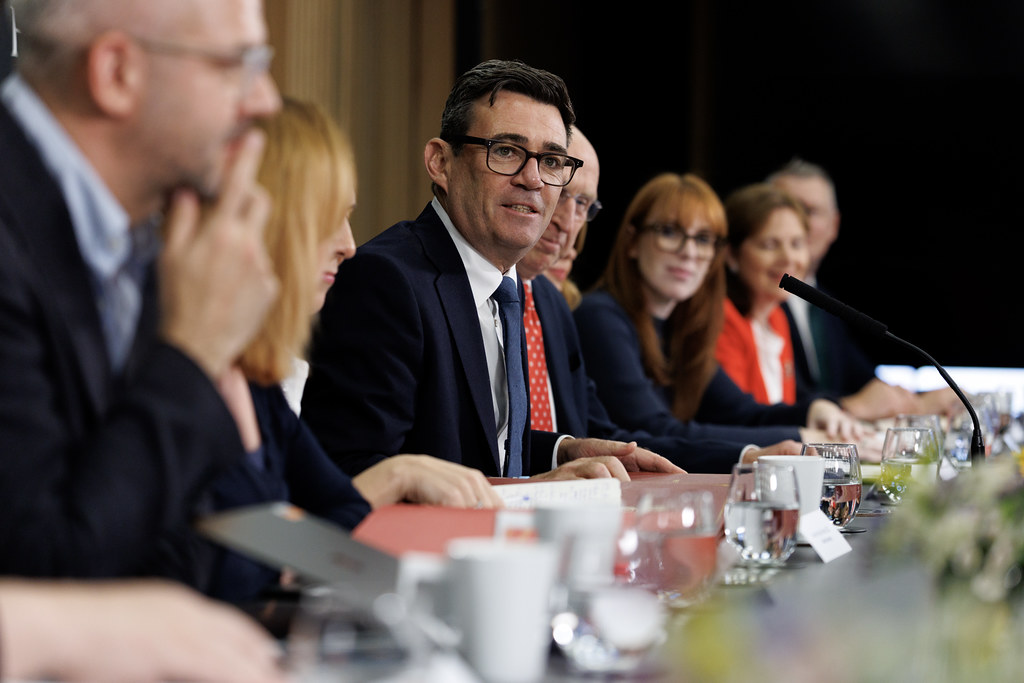
Officials in the Department for Health and Social Care have drawn up a package of options for Prime Minister Andy Burnham, as he prepares to confront one of the most politically fraught questions of his early premiership: how to pay for the overhaul of the country’s care system.
Among the proposals being considered is a new, mandatory levy on income, which would feed into a privately managed fund rather than general taxation. Under this model, workers over the age of 34 would pay 1.8 per cent on earnings above £6,240, with the money invested on their behalf and drawn on when they eventually need care in old age. Wealthier pensioners would, in addition, be expected to meet between 10 and 45 per cent of their own costs, depending on their assets.
This approach differs from National Insurance, which funds current spending, in that contributions would be ring-fenced and invested for each working-age cohort rather than spent immediately on today’s pensioners. The idea originated with Re:State, a public-services think tank that Mr Burnham advised earlier this year, and which calculated that a worker on £50,000 would pay an extra £788 annually, rising to £1,327 for someone on £80,000.
Civil servants have reportedly also looked at “pay-as-you-go” alternatives modelled on systems in Germany and Japan, where today’s workers directly fund today’s elderly. German employees currently contribute 1.8 per cent of salary to such a scheme, while in Japan workers cover half the cost of care, with the state making up the rest. Analysts have cautioned that both countries’ ageing populations are placing these systems under increasing strain, raising doubts about their long-term sustainability.
A universal, NHS-style care service offering free personal care at home is also said to be on the table, at an estimated cost of £18 billion a year, alongside options such as capping individual care costs, or expanding community-based support.
Any of these routes would represent an alternative to a flat 10 per cent levy on estates after death, a policy Mr Burnham has floated on and off since first proposing it in 2009 as health secretary, despite it having earned the “death tax” label from critics. Downing Street has so far declined to rule the estate levy out.
Government sources indicated this week that no final decision will be taken until Baroness Casey completes her independent review of care funding, a report commissioned under the previous premiership and originally due in 2028, but which may now be brought forward given the urgency Mr Burnham has attached to the issue.
The Prime Minister has spoken repeatedly of the strain social care places on the NHS, warning that hospitals risk being overwhelmed by patients who cannot be discharged for lack of care provision at home. He has pledged to spend “whatever political capital” he has to fix the system, and has promised a public conversation about how it should be funded.
The renewed push comes as economists warn of a wider fiscal squeeze. The National Institute of Economic and Social Research has estimated that an extra £24 billion will need to be found by the end of the decade, and has urged ministers to consider breaking Labour’s manifesto pledge not to raise income tax in order to close the gap.
The plans have already drawn fire from the Conservatives. Kemi Badenoch, the party leader, has written to Mr Burnham demanding he rule out both tax rises and extra borrowing to pay for reform, arguing that any settlement must be fair to those who have already saved to cover their own care.
Robert Jenrick has gone further, questioning whether Mr Burnham even has the mandate to revive the kind of death-tax-style levy he first floated back in 2010. James Cleverly, the shadow housing secretary, has meanwhile accused the government of using the wider tax overhaul, of which the care levy forms part, as an excuse to squeeze “Middle England” and load new charges onto homeowners.
The renewed push comes as economists warn of a wider fiscal squeeze. The National Institute of Economic and Social Research has estimated that an extra £24 billion will need to be found by the end of the decade, and has urged ministers to consider breaking Labour’s manifesto pledge not to raise income tax in order to close the gap.
The pressure on care budgets is already being felt acutely across the Midlands. Birmingham City Council, England’s largest local authority, announced £148 million of cuts earlier this year, including £43 million stripped from adult social care. In Derbyshire, the county council closed eight care homes and five day centres, with its new leadership warning that further closures and around 100 job losses could follow. Care providers and council leaders across the region have long argued that any national funding settlement must close the growing gap between the rising cost of care and what local authorities can raise through council tax alone, a gap that hits harder in areas with older populations and thinner resources than councils in the South East.
Health policy experts have cautioned that any new settlement must be paired with a credible plan for sharing costs fairly. Some have suggested a phased approach, beginning with free personal care of the kind already available in Scotland, as a stepping stone toward a more comprehensive system, with families given the option to pay privately for a higher tier of care on top of a state-guaranteed minimum.
Downing Street and the Department for Health and Social Care have been asked for comment.
Main Image: https://creativecommons.org/licenses/by
Comments (0)