
Keir Starmer Faces Deepening Labour Revolt as 79 MPs Call for Him to Resign – NATIONAL NEWS
Sir Keir Starmer is facing one of the most serious crises of his premiership after 79 Labour MPs publicly called for him to resign or set out a timetable for his departure following heavy local election losses across England, Scotland and Wales.
The scale of the rebellion has exposed growing unrest within Labour, with MPs from across the party’s ideological spectrum openly questioning whether the Prime Minister can lead Labour into another general election.
After Labour suffered major losses in council elections, lost ground to the SNP in Scotland and was removed from power in Wales for the first time since devolution, MPs lined up to demand what many described as an “orderly transition” in Downing Street.
Several MPs warned that voters had stopped listening to Sir Keir, while others claimed he had “lost the country” and could no longer reconnect with Labour’s traditional support base.
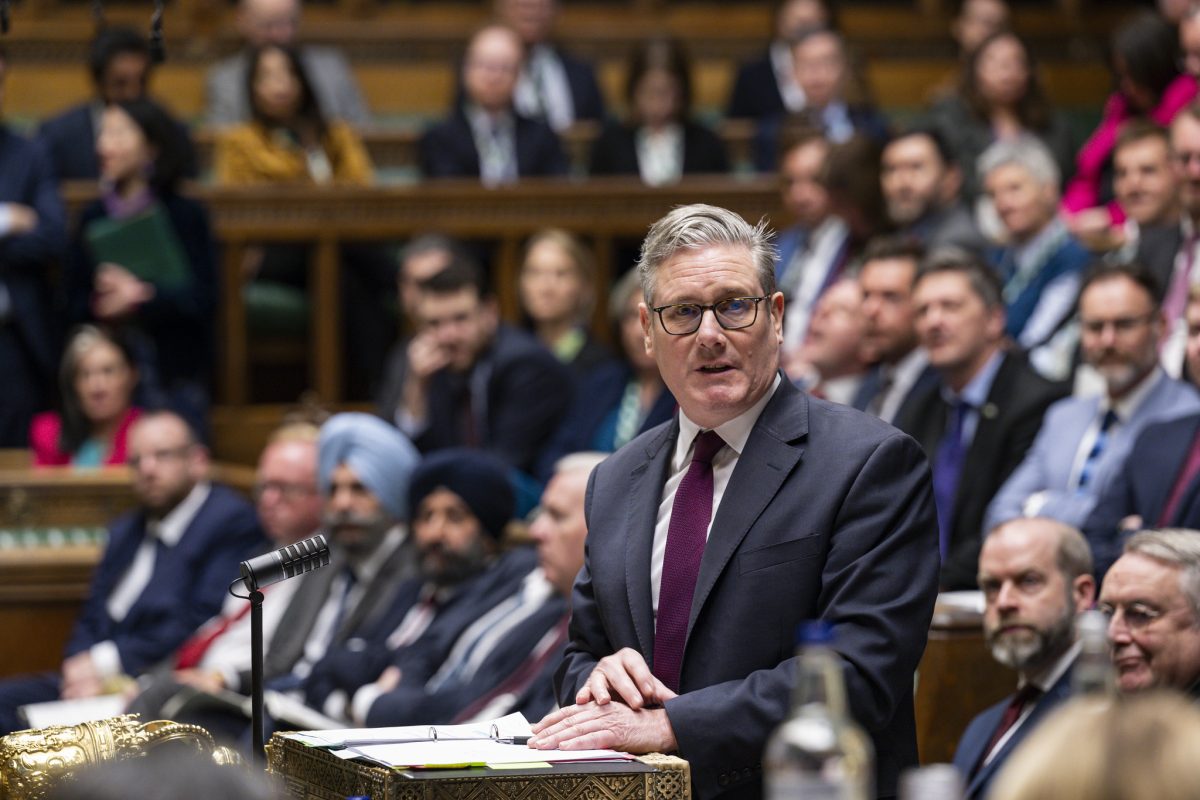
The backlash intensified after the Prime Minister attempted to reset his administration with a speech on Monday, a move critics inside Labour dismissed as inadequate and disconnected from the scale of the electoral losses.
During the speech, Sir Keir admitted the Government had “made mistakes” but vowed to prove “doubters” wrong. He also announced plans to strengthen Britain’s relationship with the European Union, nationalise British Steel and expand opportunities for young people.
However, the speech failed to quell the growing revolt inside Labour ranks.
Among the most significant interventions was that of Josh Simons, once considered one of Sir Keir’s closest allies. The former minister said the Prime Minister had “lost the country” and should oversee “an orderly transition to a new prime minister”.
Clive Betts, Labour’s longest-serving MP, said the public had “just stopped listening to Keir”, while Clive Lewis declared the Prime Minister “needs to go” and said that was “not negotiable”.
Louise Haigh, Sir Keir’s former transport secretary, warned that without “significant and urgent change” the Prime Minister could not lead Labour into another election.
Backbench MPs from the Left, including John McDonnell, Richard Burgon and Nadia Whittome, joined figures from more moderate and socially conservative wings of the party in calling for change.
Connor Naismith, associated with the Blue Labour caucus, described the election results as “catastrophic”, while Tony Vaughan, an ally of Angela Rayner, accused Labour of being “hamstrung” by the “personification of earlier, serious, mistakes”.
Several MPs explicitly linked Labour’s losses to the rise of Reform UK and Nigel Farage, warning that the party risked further electoral decline unless it changed direction quickly.
Ian Lavery warned Sir Keir could “kill the Labour Party” if he remained in post, while Neil Duncan-Jordan argued that replacing the leader without changing policy would achieve little.
The rebellion has also exposed growing divisions between Labour’s Westminster leadership and MPs representing traditional working-class areas, particularly in the North and Midlands, where many said voters no longer trusted the Government.
Emma Lewell, the MP for South Shields, described Sir Keir’s attempted reset speech as “a speech that should have begun with ‘sorry’”, accusing the Government of operating inside an “internal echo chamber”.
Catherine McKinnell, a former education minister, said it was “time for a new leader to take us to the finish line of this term and onto the next”.
Even MPs elected in Labour’s landslide 2024 victory joined the calls for resignation. Abtisam Mohamed said Labour needed leadership that “brings people together”, while Fred Thomas said it had become “unavoidably clear” that voters were not feeling improvement under the current leadership.
Pressure on the Prime Minister intensified further on Monday night after reports that Home Secretary Shabana Mahmood had privately urged Sir Keir to consider his position and set out a timetable for departure.
Her reported intervention came as six parliamentary private secretaries, unpaid ministerial aides, resigned their posts to publicly back calls for the Prime Minister to quit.
Downing Street replaced the six aides late on Monday evening in an attempt to restore discipline inside Government.
Meanwhile, Labour backbencher Catherine West announced she was collecting signatures from MPs urging Sir Keir to stand aside by September.
Under Labour rules, a formal leadership contest would require support from 20 per cent of Labour MPs, equivalent to 81 MPs.
Others openly discussed potential successors, with Clive Lewis backing Greater Manchester Mayor Andy Burnham as a future Labour leader.
Senior Labour figures have also suggested Mr Burnham should be allowed to return to Westminster through a by-election in order to contest any future leadership race.
Later this morning, Sir Keir is expected to face ministers at the Government’s weekly Cabinet meeting inside Number 10 Downing Street.
Cabinet meetings bring together the Prime Minister’s most senior ministers, including secretaries of state and other leading members of Government responsible for major departments.
The meetings are used to discuss parliamentary business, major domestic and international issues and the Government’s wider political strategy. According to the Cabinet Manual, Cabinet is “the ultimate arbiter of all government policy”.
Speaking to Times Radio this morning, Darren Jones, the Chief Secretary to the Prime Minister, failed to say that Sir Keir would lead Labour into the next general election.
Mr Jones added:
“He’s listening to colleagues, and he’s talking to colleagues … I can’t say what decision he may or may not take. I’m not going to get ahead of the Prime Minister’s decision.”
The crisis comes just a day before Wednesday’s King’s Speech, one of the most significant events in the parliamentary calendar, where the Government sets out its legislative agenda for the next parliamentary session.
Delivered by King Charles in the House of Lords, the speech outlines the laws and policies the Government intends to pursue over the coming year.
Downing Street is now under mounting pressure to stabilise the party before the speech takes place, amid growing concerns that Labour’s internal divisions could overshadow the Government’s planned agenda.
Despite the mounting rebellion, allies of the Prime Minister argue that replacing a Labour leader so soon after a landslide general election victory would risk making the party appear divided and unstable.
Sir Keir has so far rejected calls to resign, insisting he would not “walk away” after difficult election results and arguing Labour must continue delivering change.
Comments (0)