
Commonwealth Games 2026 Leaves a Legacy to Be Proud Of – NATIONAL NEWS
As the flame was extinguished on the 23rd Commonwealth Games, an independent evaluation has confirmed what Scots already felt in their bones: Glasgow did not just host the Commonwealth Games, it reinvented them, and gave the movement a working blueprint for its future.
Over eleven unforgettable days, athletes from 74 nations and territories descended on the city, chasing 1,168 medals across 215 events in ten sports.
More than 630,000 people packed venues, live sites, and festival spaces, and the city’s famous warmth was on full display, with over 4,000 volunteers giving up more than 156,000 hours of their time. Nearly half a billion views flowed through the Games’ social channels, carrying Glasgow’s name to every corner of the globe.
The independent report, commissioned by Commonwealth Sport and the Glasgow 2026 Organising Company alongside The Bulb and the University of the West of Scotland’s Centre for Culture, Sport and Events, credited the city with pulling off the quickest turnaround ever attempted for a major international sporting event, and with proving that a Games could be delivered in an entirely new way.
A City That Leads on Inclusion
Glasgow put disabled athletes front and centre rather than at the margins, staging the largest integrated Para sport programme in Commonwealth Games history: a record 47 Para events across six sports. Fittingly, the very first medal of the Games went to a Para athlete, with England’s Mark Swan taking Para Powerlifting gold.
Commonwealth Para Bowls champion Pauline Wilson said the shared village and shared competition schedule let athletes of all abilities train and mingle side by side, calling it proof of how inclusive the sport of bowls can be.
Team Wales Chef de Mission Gethin Jones praised the Opening Ceremony for setting the tone, saying the Games showed what people can achieve when they pull together with common purpose.
Clyde-Built, Through and Through
From a giant Loch Ness Monster to flying police boxes, disco-themed bowls to dancing street cleaners, and the Glasgow Rose lit up above the Finnieston Crane, the Games were unmistakably, joyfully Glaswegian. Batons cut from the city’s own fallen trees travelled the world before returning home, riverside artists told Glasgow’s story along the Clyde, and the medals themselves carried the city’s coat of arms, finished in braille and later exhibited at the Glasgow School of Art.
Finnie, the mascot dreamed up by the city’s own children, became a fixture in schools and street corners alike, while volunteer “Legends” aged from 16 to 96 carried the atmosphere from Tollcross to Scotstoun. The Organising Company’s Leading Women initiative also brought together more than 900 women across 21 events to champion women’s leadership in sport.
Doing More With Less
Rather than build new, Glasgow made brilliant use of what it already had, keeping every venue inside a tight eight-mile footprint and running all of them on renewable power from the Scottish Grid. The Games earned ISO 20121 certification for sustainable event management from the outset.
Nearly 60 percent of food served across the Games was vegetarian or plant-based, over 90 percent of temporary structures were hired and sent back for reuse, and almost 100,000 recycled plastic bottles were turned into venue banners. BYD came on board as the first ever electrified transport partner in Games history, with 71 percent of the transport fleet hybrid or electric and nearly two-thirds fully electric.
As Official Energy and Utilities Principal Partner, EDF supplied around 5.38 gigawatt-hours of fully traceable renewable electricity to three flagship venues, Scotstoun Stadium, the Glasgow International Arena, and Tollcross International Swimming Centre, enough to power roughly 2,000 UK homes for a year.
The King’s Baton Relay, run with the Royal Commonwealth Society, set out to stop a million pieces of plastic from reaching the ocean, and smashed the target, with over one million pieces collected across 111 clean-ups in 188 locations, thanks to more than 14,000 volunteers.
A Games That Belonged to Scotland
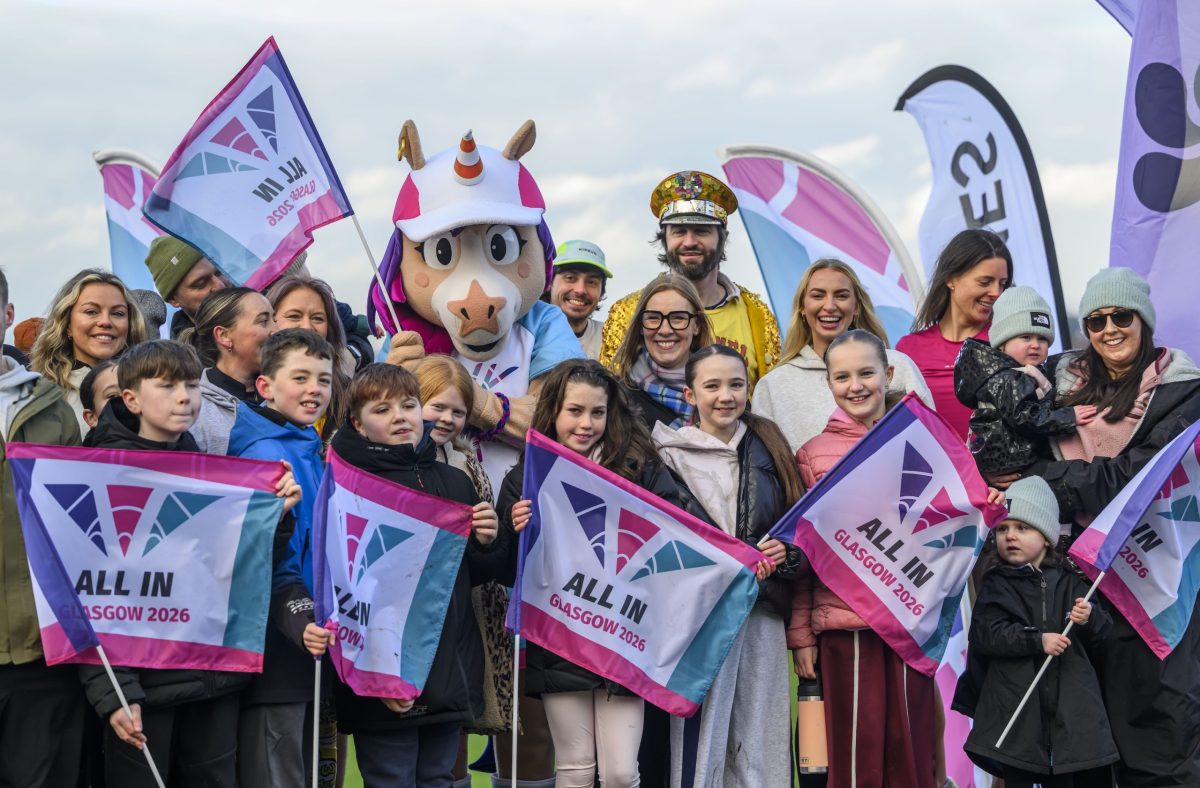
Glasgow 2026 opened its doors to the whole country through the All In programme, drawing more than 750 community groups, schools, clubs, and businesses into the Games’ spirit. Glasgow Life handed out 161 Festival Fund grants across every one of the city’s 23 wards, and a further £2.2 million from National Lottery Awards for All Scotland backed 110 Games-inspired projects nationwide.
Delivered Faster, Delivered Leaner
Glasgow 2026 Ltd will wind down before the year is out, having delivered the Games for a projected private spend of £162.6 million, a fraction of the £543 million spent in Glasgow in 2014 and the £680 million spent in Birmingham in 2022. The city still came away with lasting upgrades, including £4.7 million spent on a new track and pitch at Scotstoun Stadium and improvements at Tollcross International Swimming Pool.
Remarkably, the entire Games came together in around 18 months, delivered by a lean team of roughly 400 staff working with partners including Trivandi, People, Progress Productions, MiH Major Events, and Riedel.
A Model the World Wants to Follow
The confidence in Glasgow’s approach is already spreading: seven nations have expressed interest in hosting future Commonwealth Games, and Amdavad, India, has been confirmed as host of the 2030 Centenary Games, pointing to Glasgow 2026 as the inspiration for a leaner, greener way of staging major events.
Glasgow 2026 Chief Executive Phil Batty OBE said the report was early proof of what a reimagined Games could achieve, and said the city had shown that major events can be delivered differently, calling Glasgow’s role in reshaping the future of Commonwealth Sport a source of real pride.
Commonwealth Sport Chief Executive Katie Sadleir CNZM described the 2026 Games as a bridge to the Commonwealth Games of tomorrow, the first step toward a more collaborative and sustainable model that could open the door to more nations hosting in future.
A fuller evaluation is due later in 2026, drawing on athlete, volunteer, and visitor survey data along with an economic impact assessment, to capture the full scale of what Glasgow achieved and the lessons it leaves for the cities that follow.
Glasgow didn’t just host the Commonwealth Games. It showed the world how to do it right.
Comments (0)