
Britain checks emergency alert system as Chinese rocket debris tracked – NATIONAL NEWS
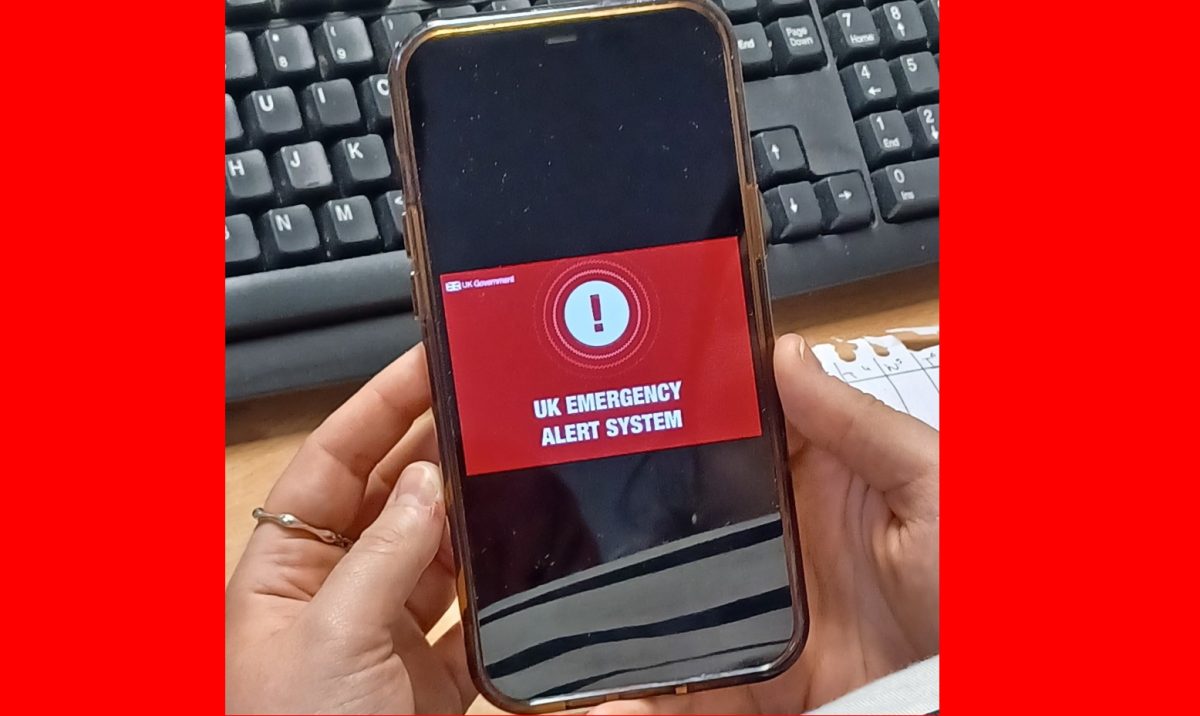
Britain’s mobile phone networks have been asked to confirm that the national emergency alert system is working properly after officials began monitoring the possible re-entry of debris from a Chinese rocket.
Government specialists are following the flight path of the Zhuque-3, or ZQ-3, rocket, which was launched in early December and is forecast to fall back through the atmosphere around Friday lunchtime somewhere over Europe.
While the likelihood of fragments reaching the UK is described as very low, authorities have taken precautionary steps in case residents near a potential impact zone would need to be warned.
A government spokesman said it was “extremely unlikely” that the debris would enter British airspace, adding that emergency arrangements were routinely tested with partners such as telecommunications providers. Industry sources, however, suggested it was uncommon for operators to be specifically asked to verify the readiness of the alert system.
The rocket’s return is being watched across Europe. Poland’s space agency said on Thursday that fragments were expected to pass over large parts of the continent. The European Union’s Space Surveillance and Tracking agency confirmed it was monitoring the descent and noted that the rocket may still be carrying a large metal tank used as a dummy payload.
The timing of the re-entry coincides with a visit to China by Prime Minister Sir Keir Starmer, who is there to promote trade and investment.
Space agencies regularly track falling debris, with objects passing near the UK roughly 70 times each month. On average, several sizeable pieces of space junk reach the Earth’s surface every day, most burning up or landing in the ocean or remote regions. British emergency planners nonetheless monitor such events in case fragments reach populated areas and pose a risk to life or property.
In a statement, a UK Government spokesman said:
“It is extremely unlikely that any debris enters UK airspace. These events happen approximately 70 times a month and the vast majority of debris breaks up upon entry and lands in the oceans. As you’d expect, we have well-rehearsed plans for a variety of different risks, including those related to space, that are tested routinely with partners.”
The Zhuque-3 Y1 mission lifted off from China’s Jiuquan Satellite Launch Center on December 3, 2025. Designed as an orbital launch vehicle, the rocket successfully placed its payload into space, although its reusable booster, built using technology similar to that employed by SpaceX, failed to land and was destroyed on the ground.
Professor Hugh Lewis, from the University of Birmingham’s Space Environment and Radio Engineering research group, said current modelling suggested the rocket body could pass over Northern Ireland, northern Scotland or northern England. According to tracking data from The Aerospace Corporation, the predicted re-entry time is about 12.30pm on Friday, with a margin of error of up to 15 hours, leaving a wide area of uncertainty over where any surviving fragments might fall.
“Most space objects burn up on re-entry so we don’t tend to worry too much,” he said, “but if it’s a bigger object, or made of materials that are highly resistant to heat, like stainless steel or titanium, they can make it through.”
He added that an emergency alert would be justified only if there were strong evidence the debris would strike the UK, saying that at present the available data did not provide that level of certainty.
Comments (0)