
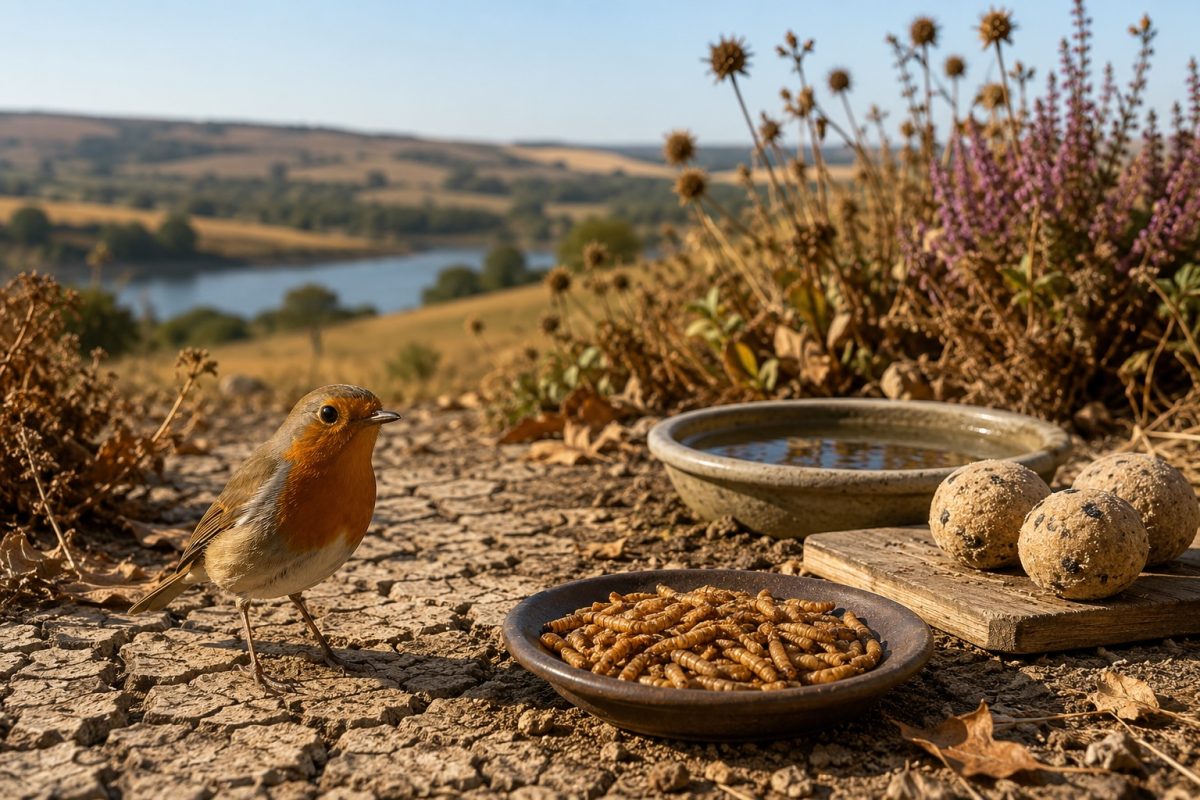
As Drought Grips Britain, Garden Birds Are Going Hungry, Here’s How to Help
With half of England now officially in drought and July recording its lowest rainfall on record for the month, gardeners across the country are being urged to put out food and water for struggling wildlife, and Robins are among the birds hit hardest.
A dry summer with no end in sight
England and Wales have just recorded their driest and sunniest July on record. Rainfall totals for the month ranged from as little as 1% of the long-term average in the south-east to 26% in the north-west, and parts of the country have gone 59 days without a single day of rain.
The Government has now declared more areas of England to be in drought, with rivers, reservoirs and groundwater levels continuing to fall. Forecasters expect the dry, hot pattern to persist through much of August.
This is the third UK drought in five years, following 2022 and 2025.
Why hard ground means hungry birds
Hard soil is a genuine problem for insect-eating birds, and Robins are a textbook example.
Robins, along with blackbirds, song thrushes, dunnocks and starlings, are largely ground feeders. In normal conditions they probe soft soil and leaf litter for earthworms, beetle larvae, leatherjackets and other invertebrates. Unlike finches or sparrows, Robins are not primarily seed-eaters, soft, protein-rich invertebrate food is their staple, especially through summer.
When weeks without rain bake the soil hard, that food supply becomes physically inaccessible. The insects and worms are often still there, just out of reach beneath ground that has effectively turned to concrete. Wildlife experts have compared it to humans trying to find food on a tiled floor, technically food may be nearby, but there’s no way to get at it.
The knock-on effects go further:
Drought stunts plant growth, meaning fewer seeds, berries and fruits later in the year, a problem for autumn and winter food supplies too.
Farmland birds are affected by early harvests, as dry conditions cause crops to ripen and be cut weeks ahead of schedule, removing cover and food sooner than usual.
Fledglings from this year’s late broods are especially vulnerable. They are less experienced foragers than adults and have smaller fat reserves, so a shortage of accessible food now can affect survival rates through the autumn moult and beyond. The Government’s own drought assessment has warned that impacts on breeding birds this year could affect populations for years to come, since fewer surviving young means fewer birds to breed in future seasons.
Water matters as much as food
Wildlife charities are stressing that fresh water is just as critical as food right now, for drinking, bathing and simply staying cool. A shallow dish or bird bath, kept topped up and cleaned regularly, can make a real difference to birds, hedgehogs, insects and other garden visitors during a heatwave and drought.
What to actually put out
Because of a separate, unrelated concern this year, the spread of trichomonosis, a disease that has contributed to a 67% decline in greenfinch numbers since national bird surveys began, the RSPB has this year advised households to pause filling standard seed and peanut feeders between 1 May and 31 October, to reduce disease spread where birds gather in numbers.
However, this pause does not apply to the soft, protein-rich foods that ground-feeding, insect-eating birds like Robins actually need most:
Mealworms (live or dried)
Suet pellets or fat balls
Fresh water, changed daily
These can, and, given the drought, arguably should, be offered throughout summer and autumn. Feeders and water baths should be cleaned at least once a week with hot, soapy water and a bird-safe disinfectant to limit disease risk.
The bottom line
Given the scale and duration of this year’s drought, putting out water and soft, high-protein food such as mealworms and suet is a genuine, evidence-based way to help Robins and other ground-feeding birds get through a period when their natural food supply is temporarily locked beneath rock-hard soil. It is not a substitute for rain, but for birds struggling right now, it can make a real difference.
Sources: GOV.UK drought update (August 2026); Met Office; RSPB “Feed Safely, Feed Seasonally” guidance (July 2026); wildlife commentary on the 2026 drought’s impact on garden birds.
Comments (0)