
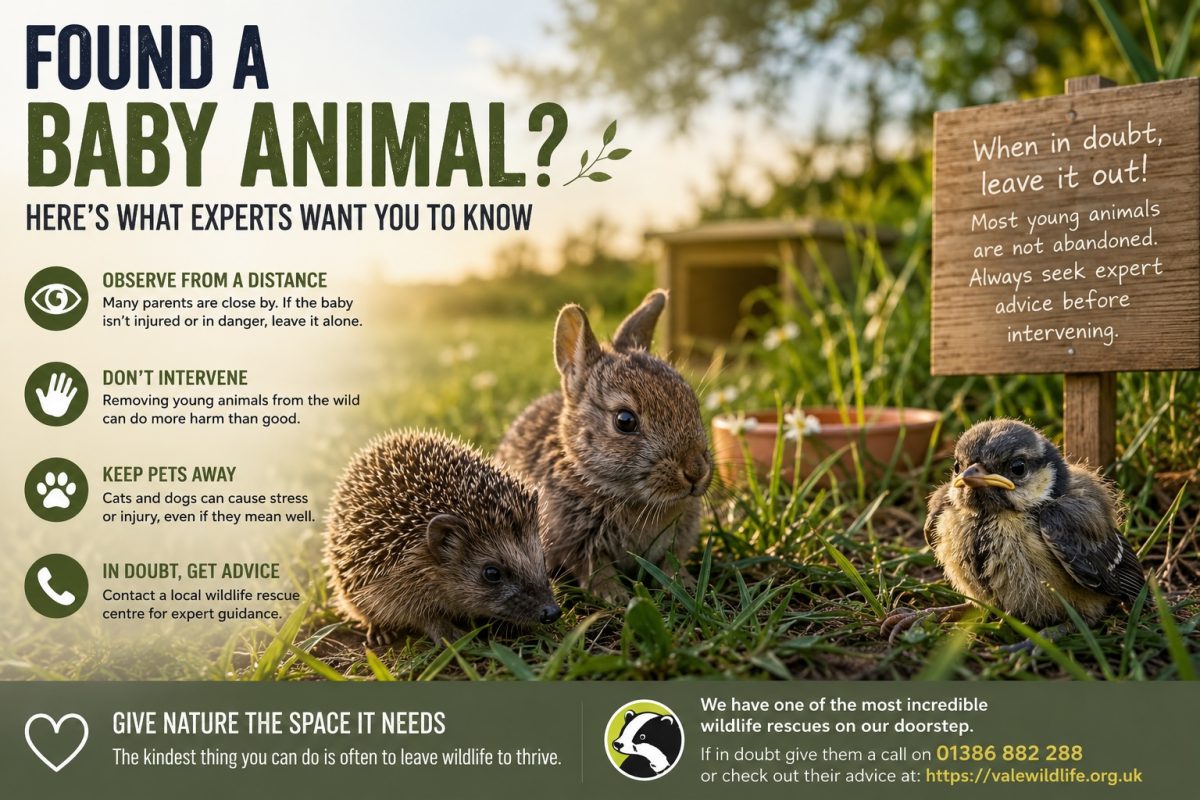
Found a Baby Animal? Here’s What Experts Want You To Know
As summer arrives and wildlife becomes more active, many people will encounter what appears to be an abandoned baby animal.
A young bird hopping across the lawn. A tiny rabbit hidden in long grass. A hedgehog wandering alone in daylight.
The natural instinct for many of us is to help. Yet wildlife experts say that, in many cases, the best thing we can do is simply leave well alone.
June is one of the busiest months of the year for Britain’s wildlife. Across the country, young animals are leaving nests, dens and burrows for the first time as they begin learning the skills they need to survive.
While they may look vulnerable, many are exactly where nature intends them to be.
One of the most common concerns involves young birds.
At this time of year, gardens, parks and village greens are full of fledglings. These are young birds that have left the nest but are not yet fully capable of flying.
Many people assume they have been abandoned when they see them sitting on the ground or perched in low shrubs.
In reality, their parents are often nearby and continue feeding and protecting them. Wildlife charities advise that unless a fledgling is clearly injured or in immediate danger from traffic, pets or other hazards, it is usually best to leave it where it is.
If necessary, it can be moved a short distance to a safer nearby spot, such as beneath a hedge or into a shrub, but it should not be taken home.
Baby rabbits are another species people frequently encounter.
Young rabbits are often left alone for long periods while their mother feeds elsewhere. This is perfectly normal behaviour and does not mean they have been abandoned.
Experts advise observing from a distance rather than intervening. In most cases, the mother will return.
The same principle applies to many young mammals.
Fox cubs, deer fawns and other youngsters are frequently left alone while their parents forage for food. While they may appear vulnerable, removing them from the wild can significantly reduce their chances of survival.
Hedgehogs, however, can sometimes require assistance.
While adult hedgehogs are commonly seen after dark, young hedgehogs found wandering alone in daylight may be struggling. If a hedgehog appears lethargic, injured or unusually small, advice should be sought from a local wildlife rescue organisation.
The recent warm weather also means that many young animals can become dehydrated. Wildlife experts recommend leaving shallow dishes of fresh water in gardens, particularly during dry periods. This simple act can help a wide range of species, from birds and hedgehogs to bees and butterflies.
There are also some important things people should avoid doing.
Feeding young animals inappropriate foods can cause serious harm. Bread is not suitable for birds and cow’s milk should never be given to hedgehogs, as it can make them seriously ill.
Similarly, attempting to raise a wild animal without specialist knowledge is rarely successful and can sometimes leave the animal unable to survive independently.
If an animal is clearly injured, has been caught by a cat, is trapped, or is in immediate danger, professional help should be sought. Local wildlife rescue centres and animal welfare organisations can provide advice on the best course of action.
For most healthy young animals, however, the advice remains surprisingly simple.
Watch from a distance.
Nature has spent millions of years perfecting the process of raising young animals, and while it can be difficult to resist the urge to intervene, the kindest action is often to allow wildlife to continue its journey undisturbed.
As Britain’s gardens, parks and countryside come alive during the summer months, residents are being encouraged to enjoy these encounters, appreciate the remarkable wildlife living around them, and remember that not every baby animal needs rescuing.
Sometimes, the best help we can offer is simply giving nature the space to do what it does best.
Fortunately, residents across Worcestershire, Warwickshire and the West Midlands have access to one of the country’s leading wildlife rescue organisations right on our doorstep.
If you are ever unsure whether a young animal genuinely needs help, it is always best to seek expert advice before intervening.
The dedicated team at Vale Wildlife Hospital and Rehabilitation Centre have been rescuing, treating and rehabilitating injured, orphaned and sick wildlife for decades, helping thousands of animals every year.
If you find an injured or vulnerable wild animal and are unsure what to do, call their advice line on 01386 882 288. You can also find a wealth of expert guidance and wildlife advice on their website: Vale Wildlife Hospital and Rehabilitation Centre
As wildlife experts often remind us, the right advice at the right time can make all the difference, both for the animal and for the person trying to help.
Five Signs A Baby Animal May Need Help
- It is visibly injured or bleeding.
- It has been caught by a cat.
- It is cold, weak or unresponsive.
- It is trapped and unable to escape.
- You have observed it for a significant period and no parent returns when one would reasonably be expected.
If in doubt, contact a wildlife rescue organisation before intervening. Most young animals that appear abandoned are not actually orphans.
Comments (0)